Executions of Traitors
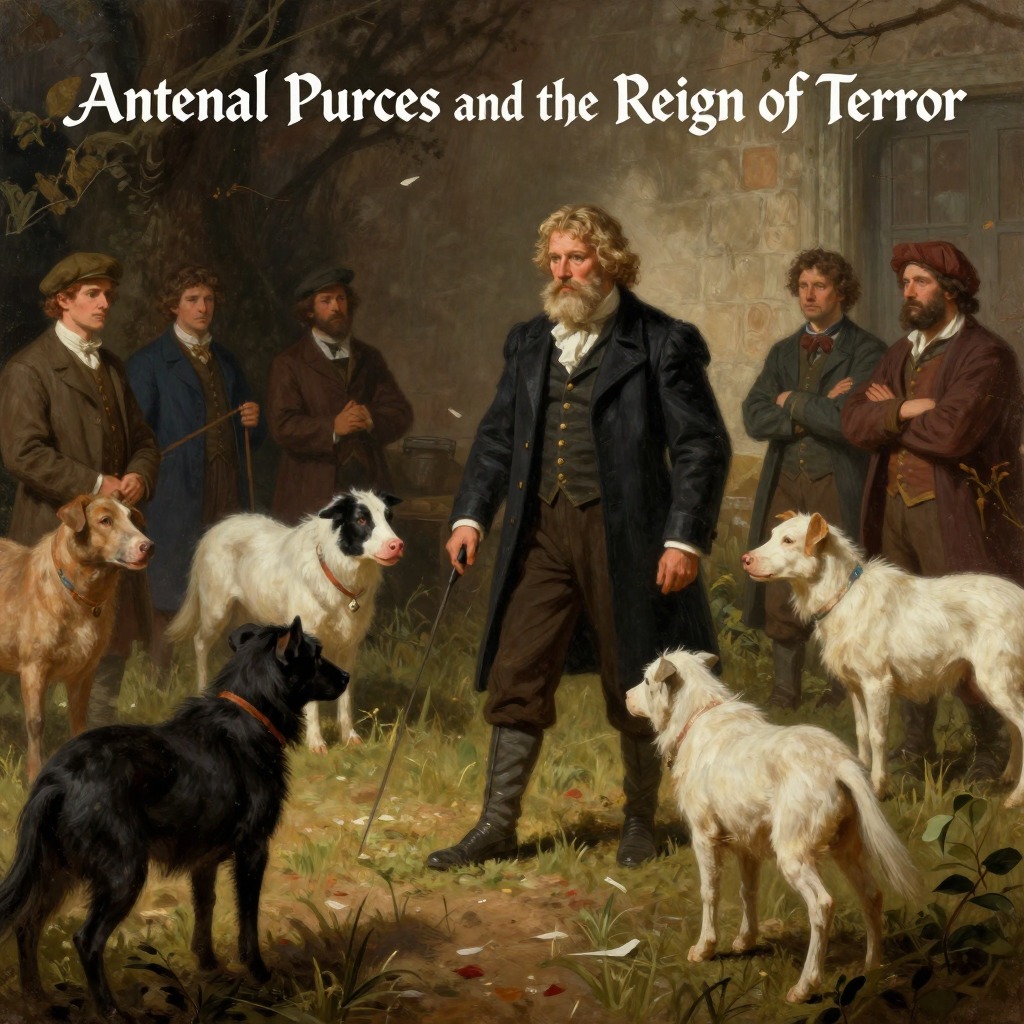
Animal FarmFour days after Squealer's warning that Snowball's secret agents lurked among them, Napoleon ordered all animals to assemble in the yard. He emerged from the farmhouse wearing both his recently self-awarded medals, "Animal Hero, First Class" and "Animal Hero, Second Class," with his nine enormous dogs frisking around him, their growls sending shivers through the onlookers. The animals cowered silently, sensing that something terrible was about to happen. Napoleon stood sternly surveying the audience, then uttered a high-pitched whimper. Immediately the dogs bounded forward, seized four pigs by the ear, and dragged them, squealing with pain and terror, to Napoleon's feet. The pigs' ears were bleeding; the dogs had tasted blood and for a few moments appeared to go mad. Three of them flung themselves at Boxer, who caught one in mid-air with his great hoof and pinned it to the ground. The dog shrieked for mercy, and the other two fled. Boxer looked to Napoleon for guidance; Napoleon, his countenance shifting, sharply ordered Boxer to let the dog go, and the animal slunk away bruised and howling. The four pigs, trembling, confessed without further prompting that they had been secretly in touch with Snowball since his expulsion, had collaborated in destroying the windmill, and had agreed to hand over the farm to Mr. Frederick. They added that Snowball had privately admitted to being Jones's secret agent for years. The moment their confession ended, the dogs tore their throats out.
In a terrible voice, Napoleon demanded whether any other animal had anything to confess. The three hens who had led the egg rebellion stepped forward, stating that Snowball had appeared to them in a dream and incited them to disobey. They were slaughtered. A goose confessed to having secreted six ears of corn and eaten them in the night. Two sheep confessed to having urinated in the drinking pool, urged by Snowball, and two others to having murdered an old ram by chasing him around a bonfire when he was coughing. All were slain on the spot. The tale of confessions and executions went on until a pile of corpses lay before Napoleon's feet, and the air grew heavy with the smell of blood—a scent unknown since the expulsion of Jones. When it was over, the remaining animals, except the pigs and dogs, crept away in a body, shaken and miserable. They did not know which was more shocking—the treachery of those who had leagued with Snowball, or the cruel retribution they had witnessed. In the old days, equally terrible bloodshed had occurred, but it seemed far worse now that it happened among themselves. Since Jones had left, no animal had killed another—not even a rat. The animals made their way to the little knoll where the half-finished windmill stood and lay down as though huddling for warmth.
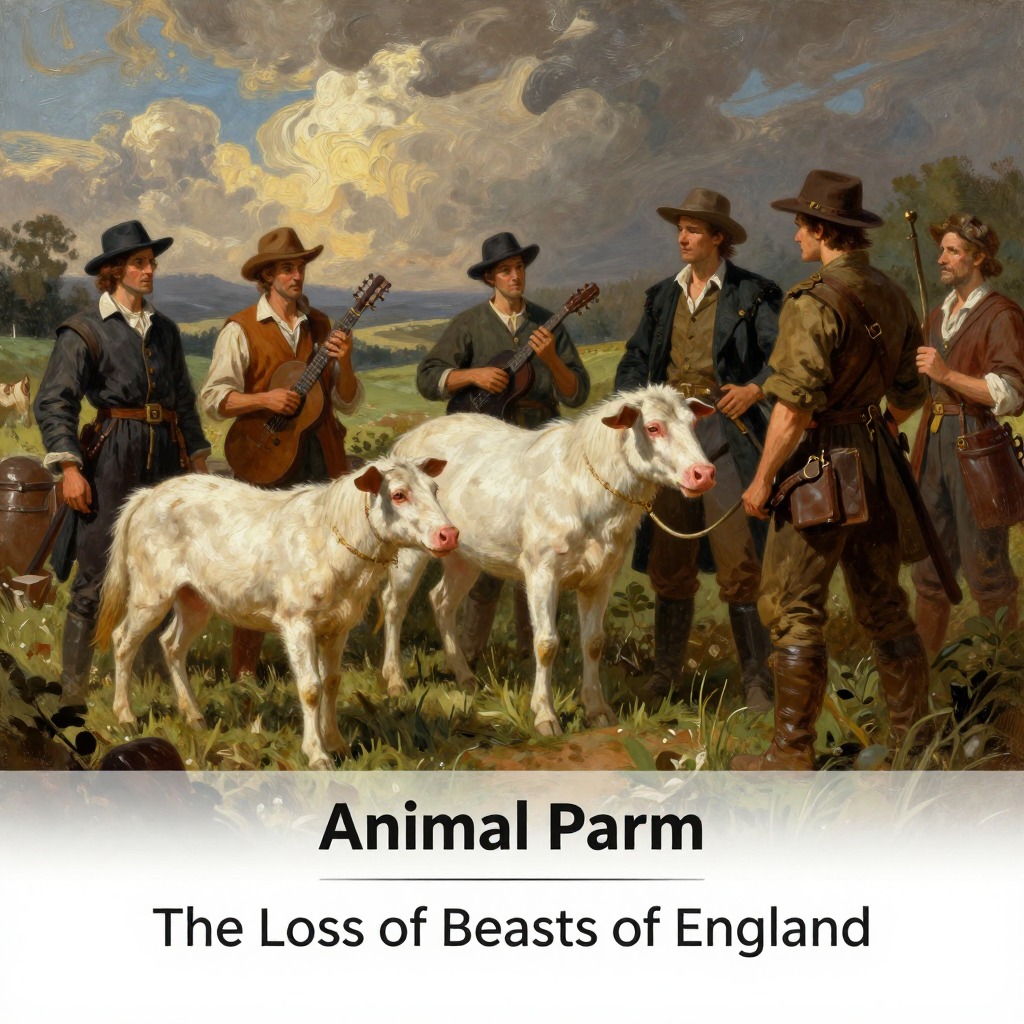
For some time nobody spoke. Only Boxer remained on his feet, fidgeting and uttering little whinnies of surprise. Finally he said he did not understand it, that such things should not happen on their farm, and concluded that the fault must be in themselves. His solution was to work harder; from then on he would get up a full hour earlier. He moved off to the quarry, collected two loads of stone, and dragged them to the windmill before retiring. The other animals huddled around Clover on the knoll, which gave them a wide view of the countryside. The spring evening was clear, the grass and hedges gilded by the level sun. Never had the farm—their own farm, every inch their own property—appeared so desirable. Clover's eyes filled with tears. If she could have spoken, she would have said that this was not what they had aimed for when they had set out to overthrow the human race. These scenes of terror and slaughter were not what they had looked forward to on the night Old Major first stirred them to rebellion. She had envisioned a society of animals set free from hunger and the whip, all equal, each working according to his capacity, the strong protecting the weak. Instead, they had come to a time when no one dared speak his mind, when fierce dogs roamed, and when comrades were torn to pieces after confessing to shocking crimes. Yet she knew they were still better off than in Jones's day, and she would remain faithful. But it was not for this that they had built the windmill and faced the bullets of Jones's gun. Feeling that singing might substitute for the words she could not find, she began to sing "Beasts of England." The animals around her took it up, and they sang it three times, slowly and mournfully, as they had never sung it before. They had just finished when Squealer, attended by two dogs, approached and announced that by a special decree of Comrade Napoleon, "Beasts of England" had been abolished. The Rebellion was now completed, he said; the execution of the traitors was the final act, and the song had no further purpose. Some animals might have protested, but the sheep instantly broke into their usual bleating of "Four legs good, two legs bad," which put an end to any discussion.
The executions marked a decisive rupture in the life of Animal Farm. The original commandment "No animal shall kill any other animal" had been violated; within days, the animals would discover that the words "without cause" had been added, justifying the slaughter. The manipulation of memory—the animals' vague recollections of Snowball's heroism now overridden by Squealer's narratives—demonstrated how the regime weaponized the past. The abolition of "Beasts of England," the anthem of the Rebellion, signified the final suppression of revolutionary hope. The cult of Napoleon, already developing with titles like "Father of All Animals" and "Terror of Mankind," would intensify, and the pigs would gradually adopt human habits, walking on their hind legs, wearing clothes, and carrying whips. The executions were not merely a punishment for alleged treason; they were a ritual of terror that redefined the boundaries of loyalty and eliminated any possibility of dissent. The animals' inability to articulate their despair, and their return to work, confirmed the success of the regime's strategy. The farm had become a place where the only response to atrocity was harder labor and unquestioning faith in the Leader.